


Flowers of the Rhine is a serialized LGBTQ+ themed historical romance novel with new chapters every two weeks. Read on Substack or listen on Substack, Apple Podcasts, and Spotify.
Table of Contents | Introduction | Historical Notes
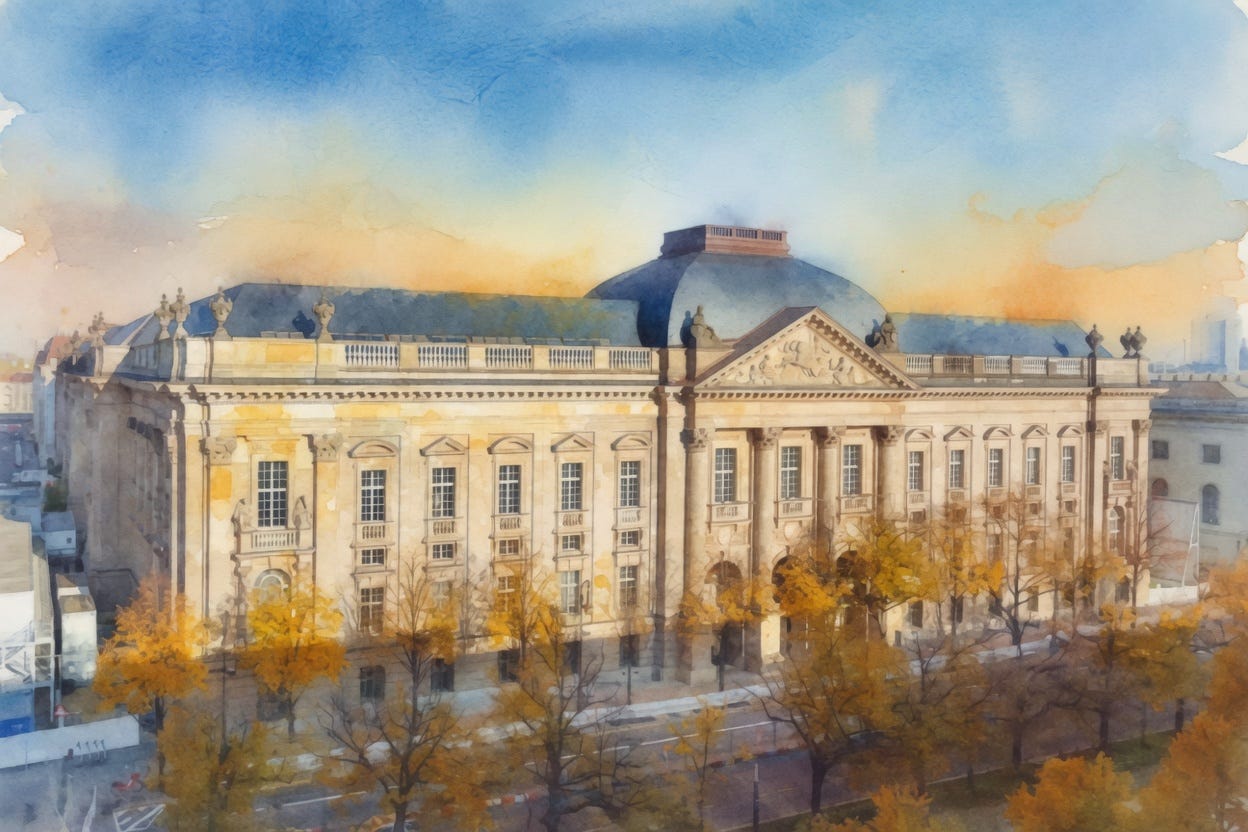
Sixteen librarians and archivists sat in the main reading room of the Staatsbibliothek zu Berlin, each spaced two meters apart, careful not to breathe too close to one another. Cloth masks hid all but their eyes. The hairs on Jenna’s arms bristled as she scanned the room. She could tell she was not the only one feeling uneasy as she watched her colleagues fiddling with their masks. Outside the room, maintenance workers covered computer banks with white sheets and lined up chairs against the walls.
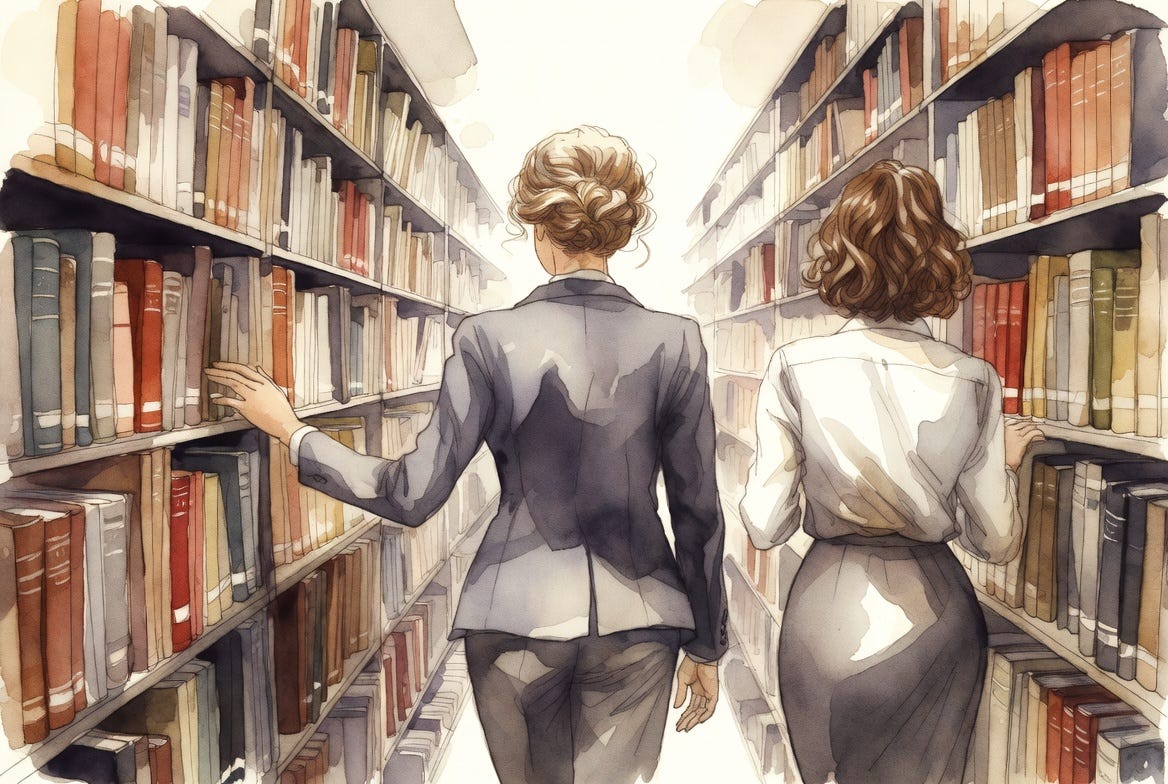
Dr. Hoffmann, the head librarian, stood before them. Jana remembered her first day six years ago. Dr. Hoffmann had led her through the towering shelves, caressing the leather spines with one hand as she walked. “These books, especially the ideas within them, will endure long after we’re gone,” she’d said.
Now more than ever, Jana wished she could find comfort in the lasting power of the written word and the knowledge stored in the books that filled the library.
But today, Dr. Hoffmann’s shoulders were slumped, and her mask hid any expression that might have reassured her staff.
“We don’t know how long the closure will last.” Her voice echoed in the half-empty room. “Could be weeks. Could be months. Could be longer.”
The room fell silent. No one knew how to respond.
“If anyone lacks a laptop or computer at home, IT will provide one. See Martin before you leave.”
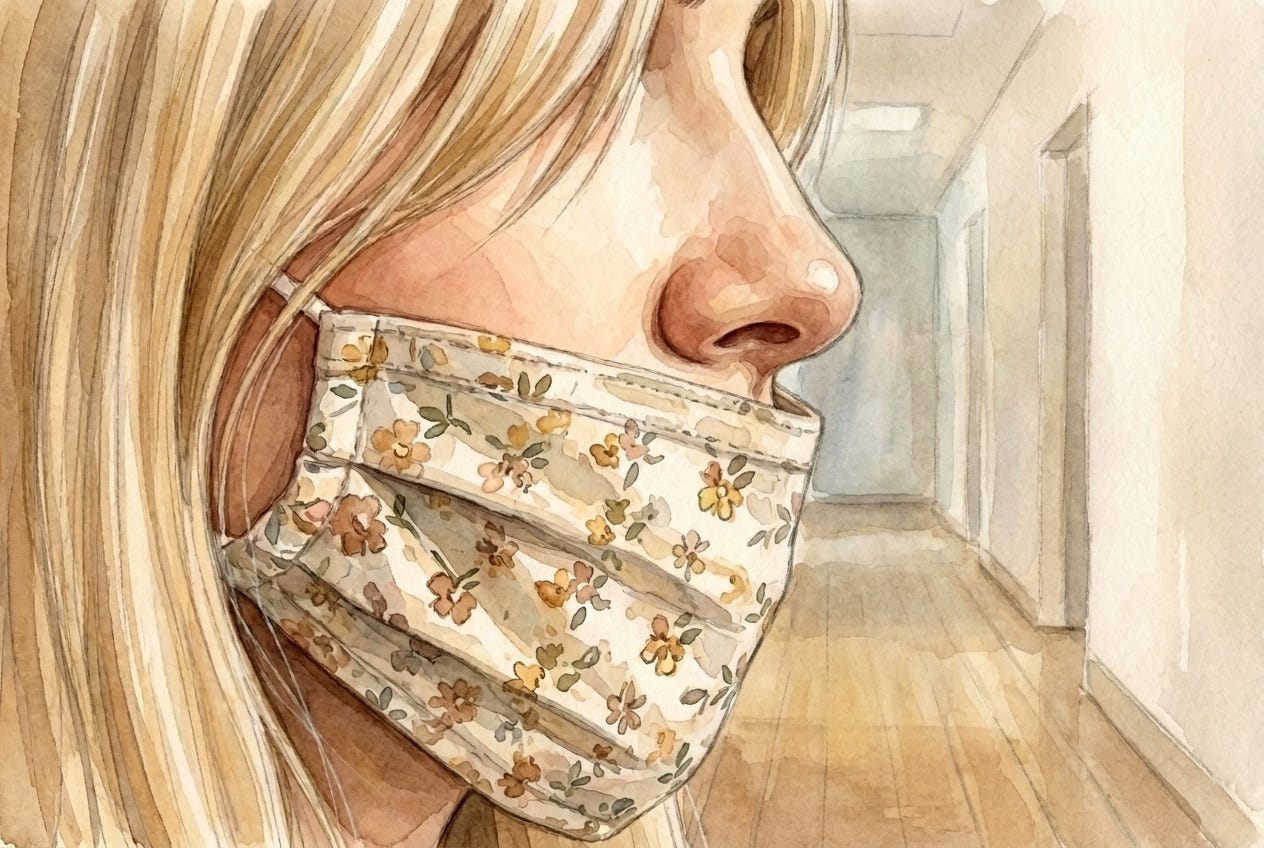
Petra raised her hand from three seats away, flowers on her mask, earnest as ever. “What exactly will we be doing at home?”
“The online catalog will need the most attention. Digital requests will go up, and people will depend on remote access to our online catalog more than ever before.”
A cough from somewhere in the back made everyone flinch.
“However.” Her voice grew a bit more hopeful. “This situation presents us with a unique opportunity. The basement archive has too many volumes that haven’t been cataloged. We’ve probably got books down there that are over a hundred years old. I want each of you to take home as many boxes as you can handle. Go through them and enter them into the system. It’s time we finally caught up on this backlog.”
Jana had been asking to work on the basement archive for two years. Dr. Hoffmann always responded that they were too busy, too short-staffed, or that it wasn’t a priority.
Her hand shot up.
“Can I request the oldest manuscripts?”
Several colleagues turned to look at her. She rarely volunteered for anything.
“The pre-1920 collections,” she clarified. “If nobody minds.”
Dr. Hoffmann nodded. “Sure. Take whatever you can carry.”
Old books excited Jana more than most people did. She loved the faded covers and the smell of old paper. The pages stained by unknown hands. She enjoyed the way Germans wrote in the nineteenth century, and how words had changed meanings or even vanished over time. Sehnsucht meant longing, but also ache and incompleteness. Heimat meant home, but also belonging and the feeling of being understood without words. Each book was a puzzle from another time. She could lose herself in that work for hours, even days.
Even months.
The meeting ended with nervous small talk and half-hearted auf wiedersehens. Jana grabbed a rolling cart from the processing room and headed to the basement. She knew the elevator would soon be crowded as everyone hurried to get their boxes before heading home.
The elevator opened to rows of shelves holding cardboard boxes and old wooden crates filled with books, most of them marked only with cryptic numbers and faded dates. Jana took her time, checking each box until she found the ones she wanted—those with the oldest books. She loaded six onto her cart, stacking them with care.
By the time she wheeled back toward the elevator, most of her colleagues were just arriving.
She hit the down button for the parking garage and waited.
Petra suddenly appeared next to her, pushing her own cart piled high. Her mask had slipped below her nose. Jana shook her head. It will be a miracle if any of us survive this.
The elevator doors opened, and they both began to move.
“Sorry! You were here first,” Petra said, moving her cart to make space.
It was a tight fit, and Jana had to stand pressed against the back wall. Petra’s cart blocked the doorway.
“Well,” Petra said as the elevator lurched downward. “This is it, isn’t it? Who knows when we’ll see each other again.”
Jana murmured something noncommittal.
“I’m going to miss you,” Petra continued.
They shared the same office, but Jana usually kept to herself. Maybe Petra thought they were closer because she never stopped talking. She talked incessantly about her weekend plans, her sister’s new dog, the café that changed its pastry supplier. Jana had learned to make encouraging grunts while Petra rambled on and on. Maybe Petra confused those grunts for real conversation.
“We’ll see each other on Zoom,” Jana offered as a consolation.
Petra’s nose crinkled above her mask. “But that’s not the same.”
No, it’s not, Jana thought, her mask concealing a smile.
The elevator chimed, and the doors slid open to reveal the parking garage bathed in fluorescent light.
Petra went first, pulling her cart backward over the threshold. One of her top boxes tipped. She grabbed for it and missed. The box hit the ground and split, spilling books across the concrete floor.
“Scheiße!” Petra crouched, gathering the scattered books. Most were post-war acquisitions, their covers still bright and clean.
Her hands closed around a smaller volume that had landed apart from the others. Cloth-bound, the color faded, the spine lettering dim yet still legible.
She turned it over and read the title. Her eyebrows rose.
“Oh. This one is definitely right up your alley.”
Jana glanced at an open box on her cart and gave Petra a slight nod.
“Thanks,” Petra said, gently placing the book into the box.

Sophie had taken over the kitchen table, with blueprints scattered around her. A jar of colored pencils sat nearby. She looked up with a smile as Jana shoved the door open with her hip, carrying the first box against her chest.
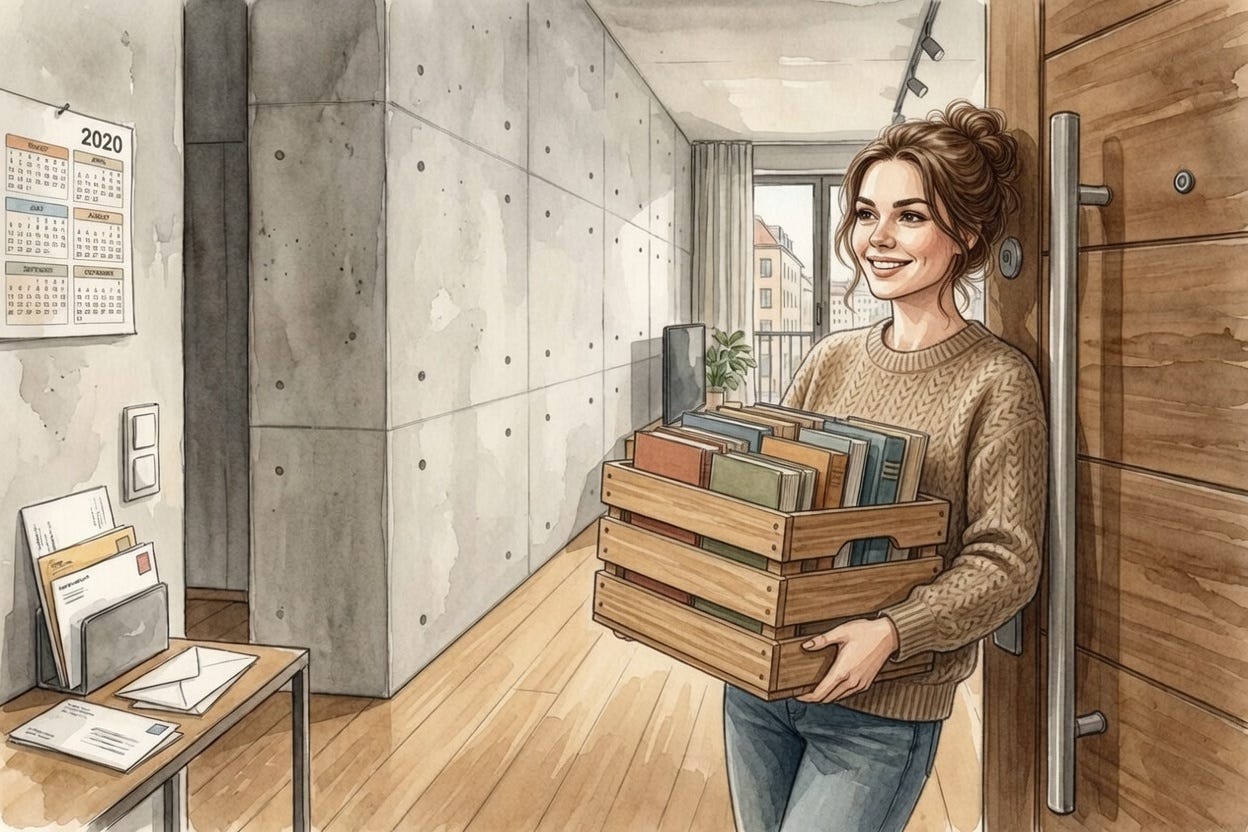
“Can I help with that?” Sophie asked.
“No, but there’s five more in the car.”
“Christ.”
Jana set the box on the floor near the bookshelf and straightened, pushing her glasses back up. “So. Are we ready for this much togetherness?” Sophie had only moved in the previous month, so her concern was warranted.
Sophie leaned back in her chair, her dark brown hair tied up in a messy knot. She was wearing one of Jana’s sweaters. One she had claimed weeks earlier. “I think so. I hope so. We’ll need to set some rules, though.”
Jana considered suggesting a rule about borrowing clothes without asking.
“Agreed,” Jana said, gesturing at the table. “I see you’ve already staked out your territory.”
“I can move—”
“Don’t. I’ll set up a desk in the corner by the bookshelf.”
Sophie stood and crossed the room, crouching down to examine the box. She picked up the small book that lay on top.
“This one looks old.” She held it up to the window and read aloud. “Der Liebe Lust und Leid der Frau zur Frau, Love’s Joy and Sorrow Between Women by Emilie Knopf.”
She looked up with a smile. “Sounds promising.”
Jana knelt next to her and kissed her softly. “The joy part, yes. We can skip the sorrow.”
If you liked this chapter, please click the heart icon below, leave a comment, and/or share. Any and all of these help Substack know to promote my work.
If you would like to read the historical notes for this chapter, you can click here.


