

The Conversation
by Clint Rauscher

Description
“The Conversation” is a poignant short story that explores the quiet morning of an elderly man as he reflects on love, loss, and friendship while fishing on a serene lake.
The story attempts to convey the complexities of unspoken emotions, particularly during routines that feel both comforting and bittersweet. The gentle rhythm of fishing serves as a backdrop to deeper themes of connection and understanding, making the moments of silence as powerful as the words left unsaid.
Listen to the audio version:
The Conversation
I woke before the alarm, as I always did. Years of rising before dawn had trained my body better than any clock ever could. The red numbers on my bedside table read 4:37 AM. Twenty-three minutes early, but there was no point trying to go back to sleep now.
My joints protested as I swung my legs over the side of the bed. The wooden floor felt cold beneath my bare feet, a reminder that fall was settling in, wrapping its cool fingers around my little cabin. I reached for the flannel shirt draped over the chair—the same chair where Martha used to lay out her clothes each night before bed. She passed eight years ago, after fifty years together, and still, some mornings, I reach across expecting to find her warm beside me.
The cabin creaked around me as I moved through the darkness. I knew every board that would groan, every doorframe slightly off-kilter from the settling of this place over the decades. My father had built it with his own hands in '39, and I'd maintained it much the same way, fixing what needed fixing but leaving its soul intact.
I shuffled to the kitchen, my hand finding the coffee pot without needing to turn on the light. The ritual was comforting—measuring the grounds, filling the reservoir with water from the tap that still ran cold and sweet from the well outside. While it brewed, I stood at the window, looking out at the darkness, seeing only the faint reflection of myself against the glass.
The coffee was black and strong, warming my insides as I took the first sip. Martha always said I made it strong enough to float a horseshoe. The thought made me smile as I filled my thermos full.
My fishing gear waited by the door, organized the night before as it had been every Tuesday evening for half a century. Tackle box, two rods, the old life vest I rarely wore but kept to satisfy my daughter when she called to check on me. "You're not as young as you used to be, Dad," she'd say from her apartment in the city. As if I needed reminding.
I stepped onto the porch, and the screen door closed behind me with a familiar slap against the frame. The air hit me first—crisp, clean, carrying the scent of pine and water. The sky was still dark, but beginning to soften at the edges, that deep blue-black giving way to something lighter at the horizon.
The path to the dock was worn smooth by my footsteps over the years. I could navigate it blindfolded, past the old oak where we'd hung the kids' swing, around the stump where I'd taught my son to identify bird calls, down the gentle slope to where the land surrendered to the water.
The lake stretched out before me, a perfect mirror in the pre-dawn stillness. Not a ripple disturbed its surface, like dark brown glass reflecting the fading stars above. Somewhere across that expanse of water, Jeb would be going through his own morning ritual. Probably already had his fancy boat in the water, knowing him.
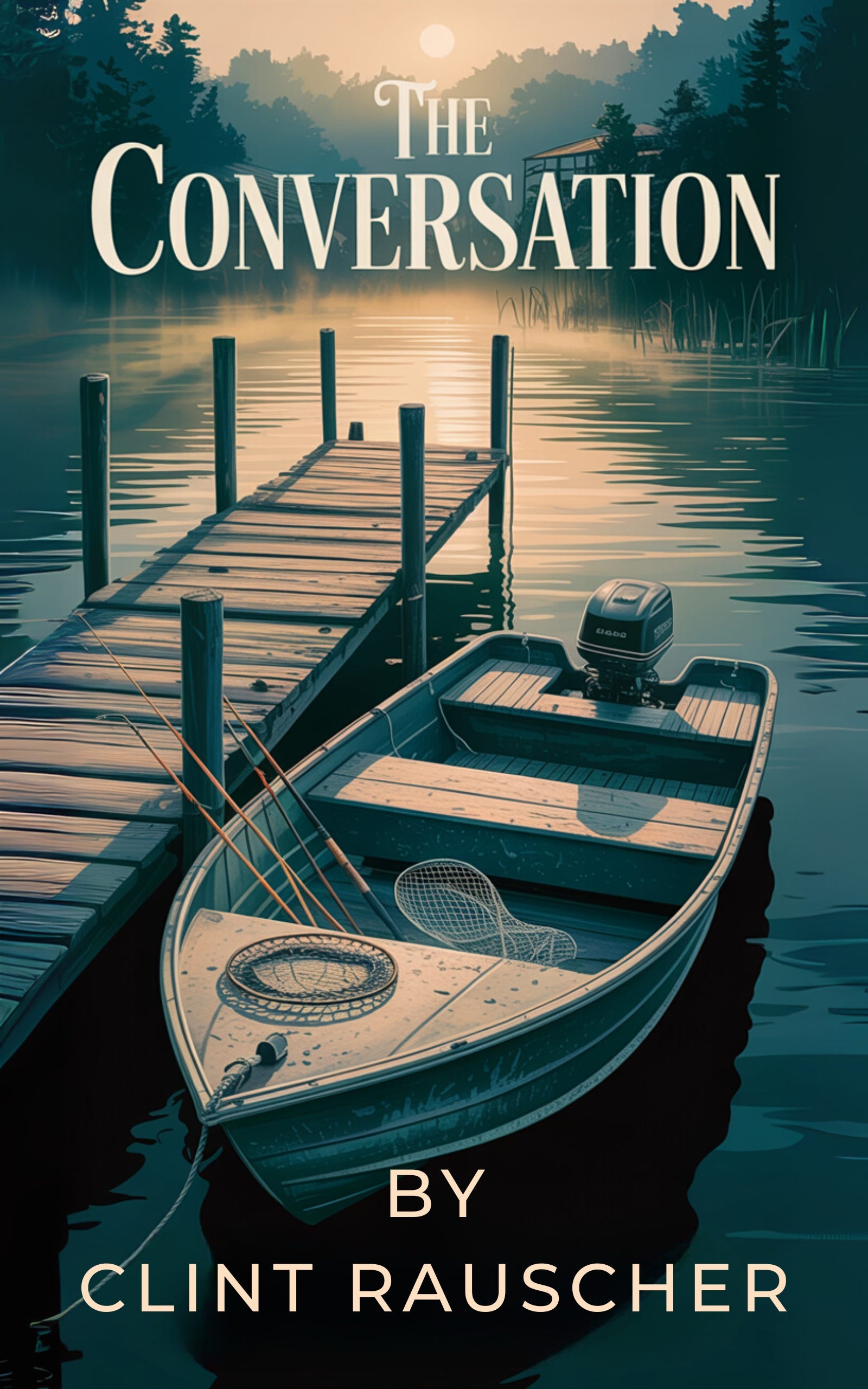
My little aluminum boat waited, tethered to the weathered dock. It wasn't much to look at—dents and scratches telling stories of fifty years on this lake. The wooden bench seats had been replaced twice, but the hull was original, sturdy and reliable like an old friend.
I loaded my gear carefully, setting the tackle box under the middle seat, propping the rods where they wouldn't get tangled. The thermos went by my seat, wedged against the side so it wouldn't tip over. Everything had its place, a system perfected over thousands of mornings just like this one.
The outboard motor was temperamental in the cold. I primed it, adjusted the choke, and pulled the cord with a strength that belied my seventy-eight years. It sputtered, coughed, then caught with a roar that seemed to tear the silence apart. I quickly throttled it down to an idle, not wanting to disturb the peace more than necessary.
As I untied the line and pushed away from the dock, the first loon call echoed across the water—that haunting, tremulous cry that had been the soundtrack to my life here. A response came from somewhere to the north, another loon answering. Their conversation more profound than most human ones I'd heard lately.
I guided the boat slowly away from shore, the bow cutting through the glass-smooth surface. Behind me, the wake spread in a perfect V, ripples expanding outward like time itself. The motor hummed steadily, a mechanical heartbeat pushing me forward.
The eastern sky was lightening now, a pale glow just beginning to outline the trees on the distant shore. A heron took flight from a hidden cove, its great wings beating slowly as it rose, a silhouette against the awakening day.
The air had that special quality it gets only at dawn—so clean it almost hurt to breathe it in, carrying the damp earthiness of the shore and the mineral tang of the lake water. My cheeks felt the bite of the chill, but my hands stayed warm wrapped around my coffee cup.
As I made my way across the lake, memories surfaced with each familiar landmark. The large boulder near the north shore where Martha and I used to picnic when we were young. The small island where the kids would swim on hot summer days, jumping from the rocks despite their mother's warnings.
And of course, the coves where Jeb and I had spent countless hours, fishing. Fifty years of friendship measured in largemouth bass and crappie and the occasional walleye.
We'd met right here on this lake, two young men with young families, both of us escaping the noise of our growing households for the peace of early morning fishing. Our wives had become friends. Our children had grown up together. We'd stood shoulder to shoulder at both our wives' funerals, first his Carol twelve years ago, then my Martha four years after.
The first rays of sunlight broke over the tree line, setting the mist aglow as it rose from the water's surface. The lake was coming alive now—a fish jumped to my left, sending concentric rings across the previously undisturbed surface. A pair of wood ducks took flight from a hidden reed bed.
I cut the motor as I approached my favorite spot, letting momentum carry me the last few yards. The silence rushed back in, broken only by water lapping against the aluminum hull and the distant calls of awakening birds. I dropped the small anchor over the side, paying out just enough line to hold position without disturbing the bottom too much.
The first cast of the day was always special—a hope and a promise sent out across the water. I selected a lure that had served me well over the years, nothing fancy, just a simple spinner that caught the new light as it flew through the air, landing with a satisfying plop about thirty yards out.
Time disappeared as I settled into the rhythm of cast and retrieve, the gentle tug of the line through my fingers connecting me to the underwater world below.
The sun climbed higher, burning off the last of the mist, warming my old bones. I shed my outer layer, draping the jacket across the seat beside me. Birds were in full chorus now—chickadees and nuthatches in the trees along the shore, the occasional belted kingfisher rattling as it flew past.
It was around nine when I heard the distinctive sound of Jeb's boat—a low, powerful hum that announced his presence long before he came into view. I smiled to myself. Some things never changed, like Jeb's need for the newest, fastest boat on the lake.
A good half-hour must've passed before I reeled in my line and started the motor, deciding to pay him a visit.
I guided my boat around the point into his favorite cove. Sure enough, there was his vessel—a gleaming bass boat that probably cost more than my truck. It sat low in the water, its fiberglass hull reflecting in the morning sun, a stark contrast to my weathered aluminum craft.
Jeb's boat had all the modern conveniences—a depth finder mounted on the console, rod holders positioned strategically around the gunwales, built-in live wells for keeping fish fresh. The boat even had comfortable-looking padded seats that swiveled, a far cry from my wooden benches.
He was focused on his fishing, his back to me as I approached. Without turning, he shifted slightly, an acknowledgment that he knew I was there. His casting arm never broke rhythm—back and forth in that perfect pendulum motion.
I throttled down as I came alongside, keeping a respectful distance. Now he turned, his weathered face as familiar to me as my own reflection. The same deep creases around the eyes, the same sun-spotted skin, though his beard had gone completely white while mine still clung to patches of gray.
Jeb nodded at me, the slight upturn at the corner of his mouth the closest thing to a smile I'd seen from him since Carol passed. His eyes, though—they held the warmth his face didn't show, a clear blue that had seen the same seven decades of this lake that mine had.
"They bitin' today?" I asked.
Jeb shook his head slightly. "Nope," he said, turning his attention back to the water.
In those words—in that simple question and simpler answer—was everything that needed saying.
I understood the slight slump of his shoulders, the way his gaze returned to the water rather than the horizon. The fish weren't biting for Jeb today, and it wasn't just about the fish. Some days were harder than others when you carried as many memories as we did.
I throttled up and moved on.
I continued around the cove, giving Jeb his space. That was the gift of a friendship like ours—knowing when words were needed and when silence was better. We'd talk another day, perhaps. Or perhaps not. It don't much matter.
The End